
Table of Contents
Click on any section below to jump directly to that part of the article:
- Introduction
- What Is Oral Cancer?
- Early Warning Signs (Checklist)
- Common Risk Factors
- When to See an Oral Surgeon
- How Oral Cancer Is Diagnosed
- Treatment Options (Overview)
- Can Oral Cancer Be Prevented?
- Frequently Asked Questions
- Key Takeaways
- Conclusion & Call to Action
What Is Oral Cancer?
Oral cancer, also known as mouth cancer, refers to the abnormal growth of cells in any part of the oral cavity. It most commonly begins as a sore, lump, or patch that does not heal.
Areas Commonly Affected
Oral cancer can develop in several areas of the mouth, including:
- Tongue (the most common site)
- Lips (especially the lower lip)
- Gums (gingiva)
- Inner lining of the cheeks (buccal mucosa)
- Floor of the mouth (under the tongue)
- Hard palate (roof of the mouth)
- Minor salivary glands
More than 95% of oral cancers are squamous cell carcinomas, which develop in the thin, flat cells lining the oral cavity.
The condition can range from early-stage, localized disease to advanced cancer that has spread to nearby lymph nodes or other parts of the body. This is why early detection through regular oral cancer screening is so critical.
Early Warning Signs You Should Know
Oral cancer often begins with subtle changes that can easily be mistaken for minor, harmless conditions. However, certain signs should raise concern especially if they persist for more than two weeks.
Here are the most important early signs of oral cancer to watch for :
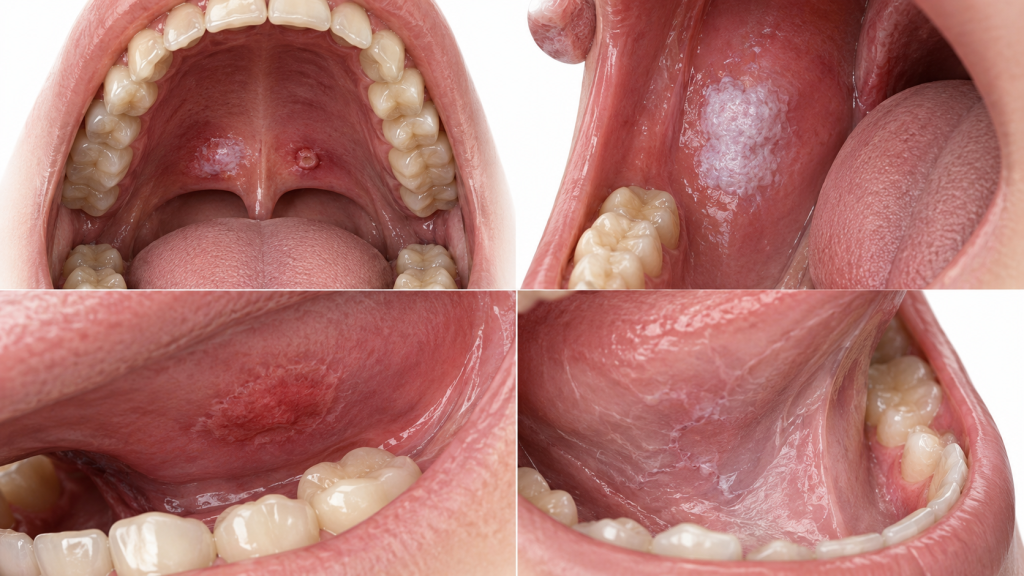
Mouth Ulcer That Doesn’t Heal
This is the most common early warning sign. Most mouth ulcers from biting your cheek, eating sharp food, or minor irritation heal within 7 to 10 days. A sore or ulcer that stays beyond two weeks especially if it is painless should be examined by a specialist.
White or Red Patches Inside the Mouth
White patches (leukoplakia) or red patches (erythroplakia) on the gums, tongue, or lining of the mouth can be early signs of oral cancer. These patches do not wipe off and may feel rough or velvety. Red patches are particularly concerning as they have a higher risk of containing abnormal cells.
Persistent Mouth Pain
Ongoing pain, tenderness, or discomfort anywhere in the mouth that does not have an obvious cause such as a dental issue should be evaluated.
Lump or Thickening in the Mouth
A lump, thickening, rough spot, crust, or small eroded area on the tongue, lip, or other part of the mouth can indicate abnormal tissue growth.
Difficulty Swallowing
Trouble or pain when swallowing (dysphagia) can be a sign of oral cancer, especially if it persists. Some people describe it as a feeling of something caught in the throat.
Difficulty Chewing or Moving the Tongue
Pain or difficulty when chewing, speaking, or moving your tongue or jaw should not be ignored.
Loose Teeth Without Obvious Cause
Teeth that become loose without any history of injury or gum disease can be a warning sign, as oral cancer can affect the supporting structures of the teeth.
Persistent Sore Throat
A sore throat that does not go away, especially when accompanied by other symptoms, warrants attention.
Voice Changes
Hoarseness or other voice changes that persist for more than two weeks can be a symptom.
Ear Pain Without an Ear Infection
Pain in the ear that is not caused by an ear infection known as referred pain can sometimes be associated with oral cancer.
Numbness in the Mouth or Lips
Abnormal bleeding, pain, or numbness in the mouth or lip area can be signs of nerve involvement.
Swelling in the Jaw or Neck
A lump or swelling in the neck, jaw, or under the chin may indicate that cancer has spread to nearby lymph nodes.
Early Warning Signs Checklist
- A mouth sore or ulcer that hasn’t healed after 2 weeks
- White or red patches that don’t wipe off
- Persistent pain or tenderness in the mouth
- A lump, thickening, or rough spot in the mouth or on the lip
- Difficulty or pain when swallowing
- Difficulty chewing or moving the tongue
- Loose teeth with no clear cause
- Sore throat that won’t go away
- Hoarseness or voice changes
- Ear pain without infection
- Numbness in the mouth or lips
- Swelling in the jaw or neck
⚠️ Important: Having one or more of these signs does not mean you have cancer. Many of these symptoms can be caused by benign conditions. However, if any symptom lasts more than two weeks, it is essential to see a specialist for a proper evaluation.
Common Risk Factors
Understanding the risk factors for oral cancer can help you take preventive steps and stay vigilant.
| Risk Factor | How It Increases Risk |
|---|---|
| Tobacco use | Smoking cigarettes, pipes, or cigars, and using smokeless tobacco (chewing tobacco, betel nut, gutka) are the leading causes |
| Heavy alcohol consumption | Frequent and excessive alcohol use significantly increases risk, especially when combined with tobacco |
| HPV infection | Infection with high-risk HPV types (especially HPV-16) is associated with oropharyngeal cancer |
| Excessive sun exposure | Prolonged exposure to UV rays increases the risk of lip cancer |
| Poor oral hygiene | Chronic irritation from poorly fitting dentures or sharp teeth may contribute to risk |
| Family history | A family history of oral or other head and neck cancers may increase susceptibility |
| Age and gender | Oral cancer is more common in people over 40 and in men |
Key Statistic: Over 95% of people with oral squamous cell carcinoma smoke tobacco, drink alcohol, or both.
When Should You See an Oral and Maxillofacial Surgeon?
If you notice any of the warning signs listed above especially if they have lasted more than two weeks—it is time to see a specialist.
🏥 When to Seek Help
- Any mouth sore or ulcer that does not heal within 14 days
- White or red patches in the mouth that do not go away
- A lump or swelling in the mouth, jaw, or neck
- Persistent pain, numbness, or bleeding in the mouth
- Difficulty swallowing, chewing, or speaking
- Loose teeth without a dental cause
- Any other unusual change in your mouth that concerns you
Oral and maxillofacial surgeons are dental specialists with advanced training in diagnosing and treating conditions of the mouth, jaws, and face. They are uniquely qualified to perform oral biopsies the gold standard for diagnosing oral cancer—and to manage surgical treatment if needed.
If you are in Odisha, Dr. Chinmayee Kar is a trusted oral cancer specialist in Cuttack who can provide a thorough clinical examination and guide you through the diagnostic process with compassion and expertise.
How Oral Cancer Is Diagnosed
If your oral and maxillofacial surgeon suspects oral cancer, they will follow a systematic diagnostic approach:
1. Clinical Examination
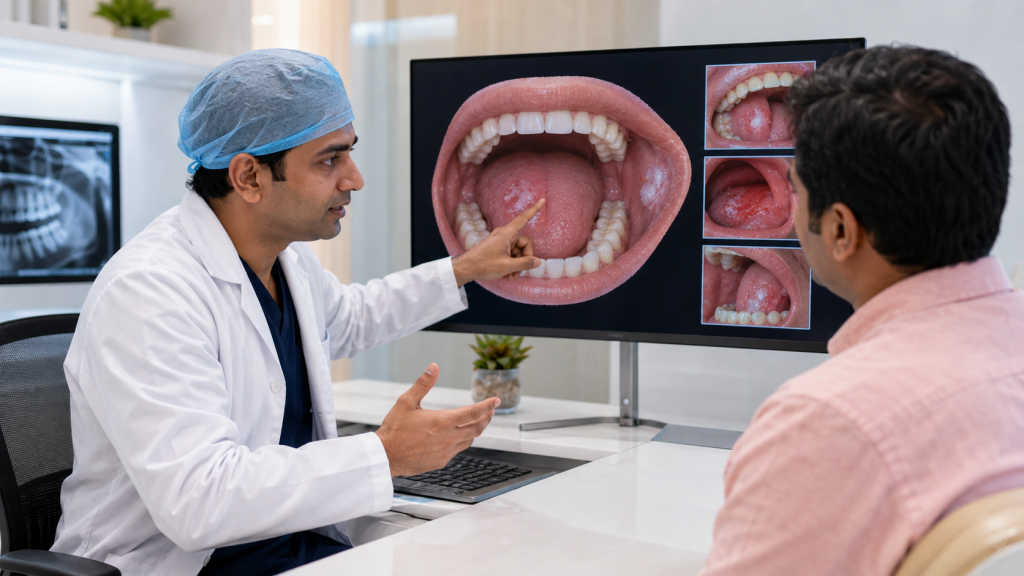
The surgeon will perform a comprehensive visual and tactile examination of your entire oral cavity, including the lips, tongue, cheeks, gums, floor of the mouth, and palate. They will also feel for any lumps or enlarged lymph nodes in your head and neck.
2. Medical History Review
Your doctor will ask about your symptoms, duration, risk factors (tobacco, alcohol use), and any family history of cancer.
3. Imaging Tests
Depending on the clinical findings, imaging such as X-rays, CT scans, or MRI may be recommended to assess the extent of the lesion and check for any spread to nearby structures or lymph nodes.
4. Oral Biopsy
A biopsy is the definitive diagnostic procedure. The surgeon removes a small sample of tissue from the suspicious area for laboratory analysis. This is the only way to confirm whether cancer is present.
5. Laboratory Analysis
The tissue sample is examined under a microscope by a pathologist to determine if cancer cells are present and to identify the type and grade of the tumor.
6. Staging
If cancer is confirmed, staging determines the size of the tumor and whether it has spread to lymph nodes or other parts of the body. This helps guide treatment decisions.
Treatment Options
Treatment for oral cancer depends on several factors, including the stage and location of the cancer, as well as the patient’s overall health. A multidisciplinary team including oral and maxillofacial surgeons, medical oncologists, and radiation oncologists—works together to develop a personalized treatment plan.
Surgical Treatment
Surgery is the mainstay of treatment for most oral cancers. The surgeon removes the tumor along with a margin of normal tissue around it. In early-stage cancers, surgery may be the only treatment needed.
Radiation Therapy
Radiation uses high-energy beams to destroy cancer cells. It may be used alone for early-stage cancers or in combination with surgery or chemotherapy for more advanced disease.
Chemotherapy
Chemotherapy uses drugs to kill cancer cells. It is often given in combination with radiation (chemoradiation) for advanced cancers.
Targeted Therapy
Targeted drugs, such as cetuximab, attack specific vulnerabilities in cancer cells.
Immunotherapy
Immunotherapy helps the body’s immune system recognize and fight cancer cells.
Reconstructive Surgery
When a significant amount of tissue is removed during cancer surgery, reconstructive surgery may be needed to restore function and appearance. This is a specialized area within oral and maxillofacial surgery.
Remember: Treatment is always individualized. Your oral and maxillofacial surgeon will discuss the best options for your specific situation.
Can Oral Cancer Be Prevented?
While not all cases of oral cancer can be prevented, you can significantly reduce your risk by following these practical steps:
Prevention Tips
- Avoid all forms of tobacco : smoking and smokeless tobacco are the leading causes
- Limit alcohol consumption : heavy drinking significantly increases risk
- Protect your lips from the sun : use lip balm with SPF and wear a hat
- Maintain good oral hygiene : brush twice daily, floss, and visit your dentist regularly
- Eat a healthy diet : rich in fruits and vegetables
- Get vaccinated against HPV : the HPV vaccine can reduce the risk of HPV-related cancers
- Perform regular self-exams : check your mouth monthly for any unusual changes
- Schedule regular dental check-ups : dentists and oral surgeons can detect early signs during routine exams
The Role of Regular Screening
Regular oral cancer screening should be part of every comprehensive dental examination. Dental professionals are trained to identify suspicious lesions early, often before symptoms develop. If you are in Cuttack, consider scheduling an oral cancer screening in Cuttack with a qualified specialist like Dr. Chinmayee Kar.
Frequently Asked Questions
1. What is the most common early sign of oral cancer?
The most common early sign is a mouth ulcer or sore that does not heal within two weeks. Other early signs include white or red patches in the mouth, persistent pain, and lumps in the mouth or neck.
2. Can oral cancer be cured if caught early?
Yes. When detected at an early stage, oral cancer is highly treatable with excellent outcomes. Early diagnosis through regular screening and prompt evaluation of suspicious symptoms is the key to successful treatment.
3. Is oral cancer painful?
Not always. In its early stages, oral cancer can be completely painless. This is why many people delay seeking help—they assume that if it doesn’t hurt, it can’t be serious. Painless ulcers or lumps are still a reason to see a specialist.
4. How is oral cancer diagnosed?
The definitive diagnostic procedure is an oral biopsy, where a small tissue sample is removed and examined under a microscope. Your doctor will also perform a clinical examination and may recommend imaging tests like CT or MRI.
5. Who is at risk for oral cancer?
The highest risk groups include people who use tobacco (smoked or smokeless), consume alcohol heavily, or have HPV infection. Oral cancer is also more common in people over 40 and in men.
Key Takeaways
- Oral cancer is a serious condition affecting the mouth, tongue, lips, and throat
- A mouth ulcer that doesn’t heal within two weeks is the most common early warning sign
- Other warning signs include white/red patches, persistent pain, lumps, difficulty swallowing, and loose teeth
- Over 95% of oral cancers are linked to tobacco and alcohol use
- Early detection through regular oral cancer screening dramatically improves treatment outcomes
- Oral biopsy is the gold standard for diagnosis
- If you notice any persistent changes in your mouth, see an oral and maxillofacial surgeon without delay
Conclusion
Oral cancer is a serious condition, but it does not have to be a death sentence. When caught early, treatment is highly effective and can preserve both function and quality of life. The key lies in recognizing the warning signs and acting promptly.
If you have a mouth ulcer that hasn’t healed, a white or red patch, persistent pain, or any of the other oral cancer symptoms discussed in this guide, do not wait. Schedule an appointment with a qualified specialist today.
For residents of Odisha, Dr. Chinmayee Kar offers expert oral cancer screening in Cuttack with a compassionate, patient-centered approach. With her extensive training in oral and maxillofacial surgery, she is uniquely qualified to evaluate, diagnose, and manage conditions of the oral cavity.
Your health is too important to ignore. If something feels wrong, get it checked.
Call to Action
📞 Concerned About a Persistent Mouth Sore or Unusual Patch?
Don’t wait early diagnosis saves lives. If you have noticed any of the warning signs mentioned in this article, schedule a consultation with Dr. Chinmayee Kar today.
Dr. Chinmayee Kar
Pearl Aesthetics, C446, Eye Hospital Road, above Urban Cooperative Bank, CDA Sector VI, Cuttack, Odisha 753014
Call: +91 8895434284