
It started with a simple bite—maybe of a crunchy apple or a piece of bread. You chewed, and a sharp, unexpected twinge shot through your jaw. You paused, rubbed the side of your face, and continued eating, thinking it was nothing. But it happened again. And again.
Now, every meal feels like a gamble. The simple joy of eating has been replaced by a nagging worry: What is causing this pain?
If this sounds familiar, you are not alone. Jaw pain while chewing is a surprisingly common concern that can disrupt your daily life. The pain can be a dull, persistent ache or a sharp, stabbing sensation that makes you wince with every bite. While it might be tempting to ignore it, hoping it will go away, jaw pain while chewing is often your body’s way of signaling an underlying issue that needs attention.
Understanding the potential cause of your pain is the first step toward finding relief. Let’s explore why your jaw might be hurting and what you can do about it. If you are searching for jaw pain treatment, this guide will help you understand your options and when to consult a jaw pain treatment specialist in cuttack.
What Causes Jaw Pain While Chewing?
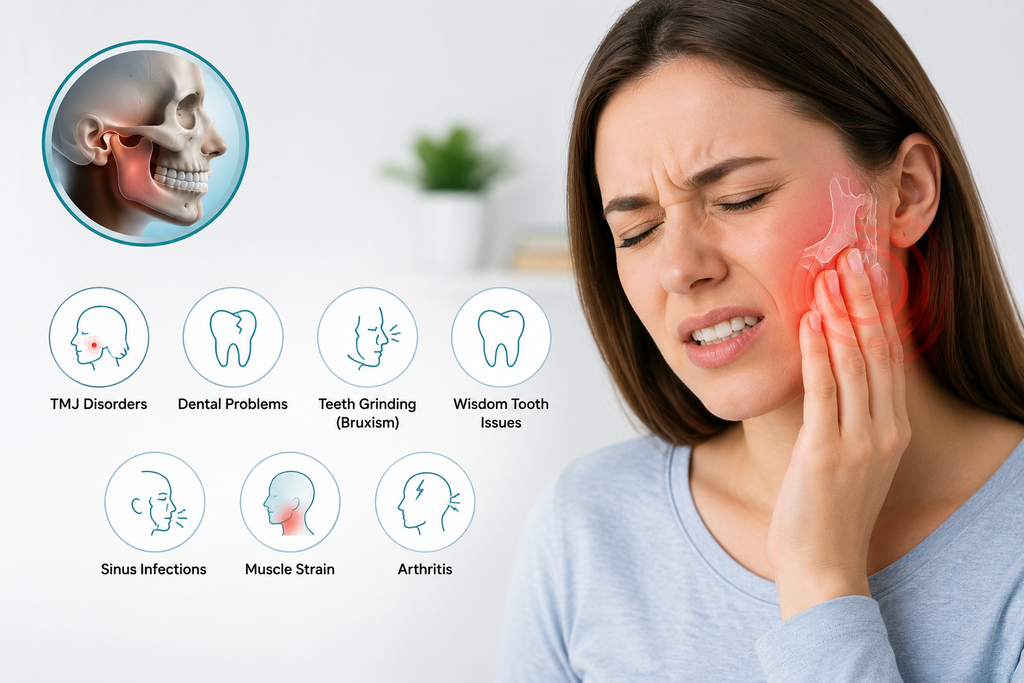
Several factors can lead to discomfort in your jaw when you eat. These causes range from common dental problems to issues with the joint itself.
Temporomandibular Joint (TMJ) Disorders
This is one of the most frequent culprits. The temporomandibular joint connects your jawbone to your skull, acting like a sliding hinge. Disorders of this joint (TMDs) can cause significant pain in the joint itself and the muscles that control jaw movement. TMDs can be triggered by various factors, including arthritis, jaw injury, genetics, and chronic teeth grinding. Studies suggest that about 1 in 3 people experience TMJ-related issues at some point in their lives.
Dental Issues
Often, the source of your jaw pain isn’t the jaw joint at all—it’s your teeth. Common dental problems that cause jaw pain include:
- Decayed or abscessed tooth: Sharp, radiating pain that worsens with chewing
- Gum disease (periodontitis): Inflammation that can spread to the jawbone
- Impacted wisdom tooth: Trapped beneath the gums, causing pressure and pain
- Misaligned bite (malocclusion): Uneven pressure on jaw muscles
Teeth Grinding or Clenching (Bruxism)
Many people unconsciously grind or clench their teeth, especially during sleep or stressful times. This habit puts a tremendous amount of strain on the jaw muscles and the TMJ, leading to muscle fatigue, tooth damage, morning headaches, and a sore jaw upon waking.
Other Causes
Jaw pain can also stem from sinus infections (causing pressure in the upper jaw), arthritis affecting the jaw joint, facial trauma from an injury, or stress-induced muscle tension. While less common, jaw pain can also be a symptom of other medical conditions, which is why professional evaluation is so important.
Common Symptoms That May Occur With Jaw Pain
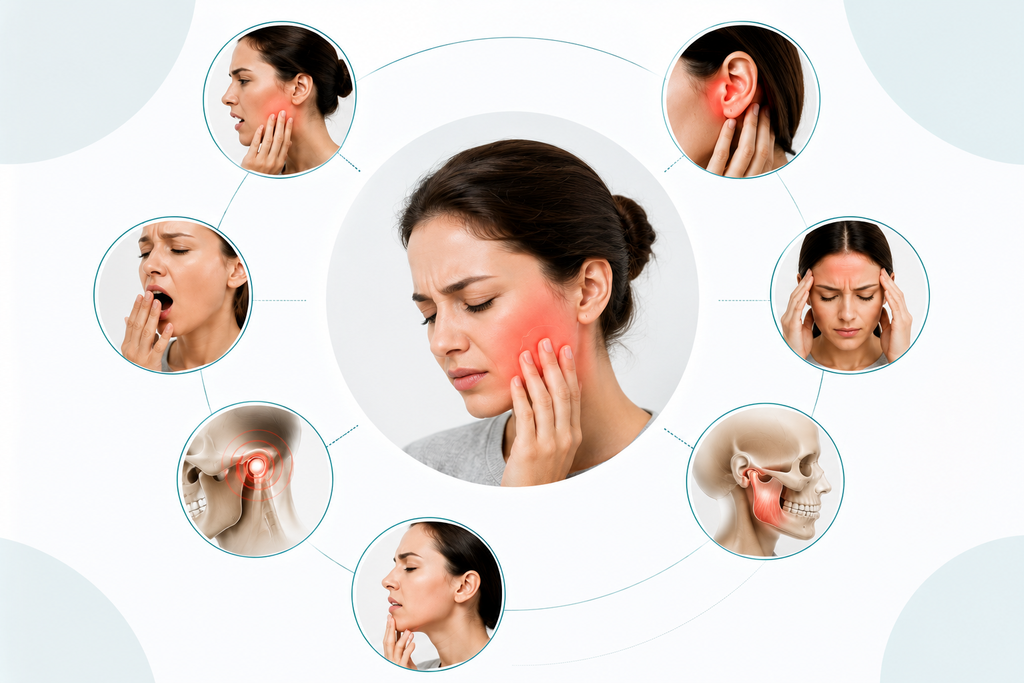
Jaw pain while eating is rarely an isolated symptom. It often comes with other signs that can help you and your jaw pain treatment specialist pinpoint the root cause.
| Symptom | What It May Indicate |
|---|---|
| Pain while chewing or opening mouth | Primary symptom, mild to severe |
| Jaw clicking or popping | TMJ issues, muscle tension |
| Difficulty opening mouth fully | Joint stiffness, muscle tightness |
| Facial pain radiating to temples/neck | Muscle strain, bruxism |
| Frequent headaches (near temples) | TMJ disorder, teeth grinding |
| Ear-area discomfort | Referred pain from jaw joint |
| Visible swelling on face or jaw | Dental abscess, infection |
When Should You See a Doctor or Dentist?
It’s easy to dismiss jaw pain as a temporary annoyance, but it’s important to know when to seek professional help. If you are looking for jaw pain treatment in Cuttack, you should consult a specialist if you experience any of these red flags:
Persistent or Worsening Pain: The pain doesn’t improve with rest or keeps getting worse.
Difficulty Eating: Pain interferes with your ability to eat and enjoy food.
Limited Mouth Opening: You can’t open your mouth as wide as you used to, or it feels locked.
Significant Swelling: Unexplained swelling on your face, jaw, or gums.
Fever: A fever accompanying your jaw pain could suggest an infection.
Pain Following Facial Trauma: Your jaw pain started after an injury or accident.
Jaw Locking: Your jaw gets stuck in an open or closed position.
Symptoms That Do Not Improve: Symptoms persist for more than a week or two.
Early diagnosis by a jaw pain treatment can prevent a minor issue from becoming a major problem.
4. How Is the Cause of Jaw Pain Diagnosed?
Getting the right diagnosis is the most crucial step toward effective treatment. A qualified professional will use a thorough approach to find the root of your pain.
Step 1: Medical and Dental History
Your specialist will ask about your symptoms, overall health, and any history of dental work or injury.
Step 2: Physical Examination
The doctor will examine your jaw joint for tenderness, listen for clicking or popping sounds, and assess your bite and tooth alignment.
Step 3: Jaw Movement Assessment
You will be asked to open, close, and move your jaw from side to side to assess range of motion and limitations.
Step 4: Dental Examination
A thorough check-up helps identify tooth decay, gum disease, impacted wisdom teeth, and signs of teeth grinding.
Step 5: Imaging Studies
Depending on the findings, your specialist may recommend dental X-rays, a CT scan for detailed bone views, or an MRI to evaluate soft tissues like the TMJ disc.
Accurate diagnosis is the foundation of effective treatment. A jaw pain treatment will use these tools to create a personalized plan just for you.
5. Treatment Options for Jaw Pain
Treatment for jaw pain depends entirely on the underlying cause. Once a diagnosis is made, your jaw pain treatment specialist will suggest an appropriate plan.
Dental Treatments
- Filling or Root Canal: For decayed or infected teeth
- Tooth Extraction: For severely damaged or impacted wisdom teeth
- Crown or Bridge: To restore damaged teeth
TMJ and Muscle-Related Treatments
- Custom Mouthguard: Worn at night to protect teeth and reduce muscle strain from grinding
- Physical Therapy: Exercises to strengthen jaw muscles and improve flexibility
- Moist Heat or Ice Packs: To reduce pain and inflammation
- Resting the Jaw: Eating soft foods and avoiding excessive jaw movement
Medications
- Pain Relievers: Over-the-counter or prescription for acute pain
- Anti-inflammatory Drugs: To reduce swelling and discomfort
- Muscle Relaxants: For short-term relief of muscle tension
Surgical Interventions
When conservative treatment fails, or when structural issues are severe, procedures may include arthrocentesis (flushing the joint), arthroscopy (minimally invasive), or open-joint surgery in rare cases.
The goal of any jaw pain treatment specialist is to start with the least invasive option and progress only as needed.
6. Simple Ways to Reduce Jaw Strain
While you should always follow professional advice, these general tips may help ease strain on your jaw:
- Choose softer foods like soups, yogurt, mashed potatoes, and oatmeal
- Avoid hard or chewy foods like nuts, tough meats, crusty bread, and chewing gum
- Cut food into smaller pieces and avoid biting into large sandwiches or apples
- Yawn with your mouth partially closed to avoid overstretching
- Notice when you are clenching during the day and consciously relax your jaw
- Practice stress-reduction techniques like deep breathing
These measures may provide temporary comfort but do not replace a professional diagnosis.
7. Why Choosing the Right Specialist Matters
Jaw pain is complex because it can stem from various issues, from dental problems to joint disorders. This is why seeking an oral and maxillofacial surgeon is often the best course of action.
These specialists have extensive training in both medicine and dentistry, making them uniquely qualified to diagnose and treat the full spectrum of conditions affecting the jaw, face, mouth, neck, and skull.
| Benefit | Why It Matters |
|---|---|
| Comprehensive Diagnosis | Identifies if pain is dental, joint-related, or something else |
| Evidence-Based Treatment | Follows proven protocols for best outcomes |
| Surgical Expertise | Trained to perform surgery safely if needed |
| Holistic Approach | Considers overall health, not just symptoms |
| Long-Term Management | Prevents recurrence and manages chronic conditions |
If you are looking for a jaw pain treatment specialist in Cuttack, an oral and maxillofacial surgeon can offer a comprehensive, evidence-based approach to identify the root cause of your pain and provide personalized treatment.
Frequently Asked Questions about jaw pain treatment
1. Why does my jaw hurt when I chew?
Jaw pain while chewing is often caused by TMJ disorders, dental problems like an abscessed tooth, impacted wisdom teeth, or teeth grinding (bruxism).
2. Can TMJ problems cause jaw pain while eating?
Yes, temporomandibular joint (TMJ) disorders are a very common cause of pain during chewing, often accompanied by clicking, popping, or limited mouth opening.
3. When should jaw pain be considered serious?
Seek medical help if the pain is persistent, worsening, or accompanied by significant swelling, fever, jaw locking, or difficulty opening your mouth.
4. Can wisdom teeth cause pain in the jaw?
Yes, impacted wisdom teeth that don’t have enough space to emerge properly can cause significant pain and discomfort in the jaw, especially when chewing.
5. Which specialist should I consult for persistent jaw pain?
An oral and maxillofacial surgeon is a specialist trained to diagnose and treat the full range of conditions causing jaw, facial, and oral pain.
6. Can stress cause jaw pain?
Yes, stress often leads to unconscious teeth clenching or grinding (bruxism), which can cause significant jaw muscle fatigue and TMJ pain.
7. How long does TMJ pain typically last?
With proper treatment, many people experience relief within a few weeks. Chronic cases may require ongoing management.
8. Are there home remedies for jaw pain?
Applying moist heat or ice packs, eating soft foods, and practicing jaw relaxation exercises can help, but these are temporary measures and should not replace professional medical advice.
Conclusion
Jaw pain while chewing is a signal that something needs attention. Whether it’s a simple dental issue or a more complex TMJ disorder, ignoring the pain can allow the problem to worsen. The good news is that with an accurate diagnosis, effective treatment is available.
If you are experiencing persistent jaw pain, don’t wait for it to disappear on its own. Take the first step toward relief and a more comfortable life by scheduling a consultation with a qualified jaw pain treatment specialist in Cuttack. They can help you understand your pain, identify the underlying cause, and guide you toward a treatment plan that fits your needs.
Meet Your Jaw Pain Treatment Specialist

Dr. Chinmayee Kar – Your Trusted Oral and Maxillofacial Expert
When it comes to jaw pain, you deserve a specialist who truly understands the complexity of your condition. Dr. Chinmayee Kar is a highly qualified and experienced oral and maxillofacial surgeon dedicated to providing compassionate, patient-centered care in Cuttack.
Why Choose Dr. Chinmayee Kar?
| Credential | What It Means for You |
|---|---|
| Expert Training | Extensively trained in both medicine and dentistry |
| Years of Experience | Successfully treated numerous TMJ and facial pain patients |
| Patient-First Philosophy | Listens, understands, and involves you in decisions |
| Evidence-Based Practice | Uses latest diagnostic tools and treatment protocols |
| Compassionate Care | Treats you with empathy and respect |
Conditions Treated by Dr. Chinmayee Kar
- Dental Implant
- Dental Braces
- Root Canal Treatment
- Full Mouth Rehabilitation
- Gum Disease Management
- Biopsy & Cancer Management
- Hair Transplant Oral & Cyst Tumor
- Crown & Bridge
- Teeth Scaling
- Dental Veneers
- Dental Laminates
- Teeth Extraction
- Teeth Filling
Ready to Find Relief?
Don’t let jaw pain control your life. Take the first step toward comfort and well-being by consulting an expert who cares.
Clinic address :-
Pearl Aesthetics Dental Clinic
Address: C446, Eye Hospital Road, above Urban Cooperative Bank, CDA Sector VI, Kataka, Odisha 753014
Call: +91 88954 34284
Book an Appointment Today