
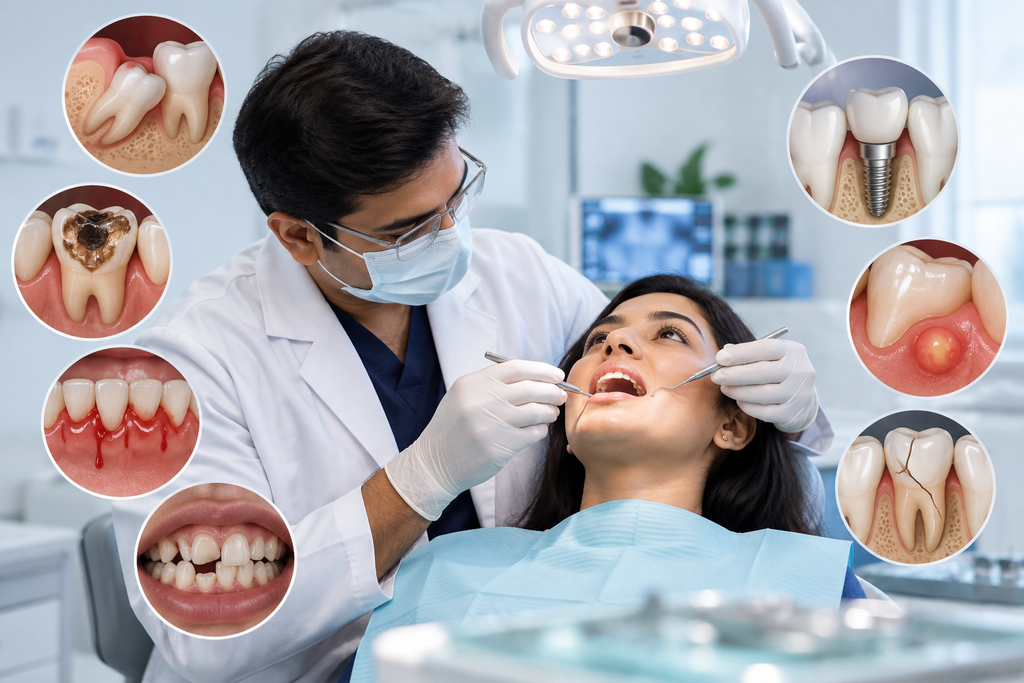
1. Impacted or Problematic Wisdom Teeth
Wisdom teeth, also called third molars, are the last teeth to emerge—usually between ages 17 and 25. Often, there isn’t enough space in the jaw for them to erupt properly, leading to impaction.
When a wisdom tooth is impacted, it may:
- Remain trapped beneath the gum or bone
- Erupt partially, creating a flap of gum tissue
- Grow at an angle, pressing against neighboring teeth
- Cause pain, swelling, or jaw stiffness
- Lead to recurrent gum infection (called pericoronitis)
- Be difficult to clean, increasing decay risk
- Damage adjacent healthy teeth
Not every wisdom tooth requires removal. However, when an impacted wisdom tooth causes recurring infection, pain, or damage to nearby teeth, an oral surgeon may recommend extraction. Deeply impacted teeth or those near nerves may require specialized surgical assessment. In some cases, patients may be referred for Dental Surgeon in Cuttack or Bhubaneswar to ensure safe and effective management of complex wisdom tooth cases.
2. Complex or Difficult Tooth Extractions
Some teeth are straightforward to remove. Others present challenges that may be better managed by an oral surgeon. Factors that can make an extraction complex include:
- Unusual tooth position or angle
- Broken or fractured teeth below the gum line
- Teeth with complicated or curved roots
- Severely damaged or decayed teeth
- Impacted teeth
- Proximity to nerves, sinuses, or other vital structures
When a general dentist anticipates difficulty, they may refer you to a specialist for evaluation. This ensures the procedure is performed safely with appropriate planning and imaging.
3. Dental Implants and Bone-Related Procedures
Dental implants are a popular solution for replacing missing teeth. While some general dentists place implants, oral surgeons often handle more complex cases, including:
- Dental implant placement
- Bone grafting to rebuild jawbone density
- Ridge augmentation to prepare the jaw for implants
- Sinus lift procedures when implant sites are near the sinuses
Treatment depends on bone volume, anatomy, oral health, and individual treatment planning. Not everyone is an immediate candidate for implants, and your surgeon will discuss whether additional procedures may be needed.
4. Jaw Problems and Facial Trauma
Oral and maxillofacial surgeons are trained to evaluate and treat injuries involving the jaw and facial bones. Common situations include:
- Jaw fractures from accidents or falls
- Facial bone injuries
- Significant dental trauma
- Problems affecting jaw function
Warning signs that may indicate a serious jaw problem include:
- Difficulty opening or closing the mouth
- Changes in the way your teeth fit together
- Significant swelling
- Persistent jaw pain after an injury
- Difficulty chewing
If you experience significant facial trauma, seek urgent professional evaluation. Timely assessment can prevent complications and support proper healing.
5. Oral Cysts, Tumors, or Abnormal Growths
Unusual lumps, cysts, or growths inside the mouth or jaw may require specialist assessment. While many are benign, evaluation is important to identify the cause.
Symptoms that warrant attention include:
- Persistent swelling
- Unexplained lumps in the mouth or jaw
- Changes in the shape of the jaw
- Persistent sores that do not heal
- Unusual areas that bleed or cause discomfort
These symptoms do not automatically indicate cancer or another serious condition. The purpose of evaluation is to determine the underlying cause. An oral surgeon may perform imaging, biopsy, removal, or coordinate further care when clinically appropriate.
6. Jaw Joint and Structural Problems
The temporomandibular joint (TMJ) connects your jaw to your skull. Problems with this joint or surrounding structures can cause:
- Persistent jaw pain
- Difficulty opening the mouth
- Locking or clicking of the jaw
- Significant changes in jaw movement
- Problems following trauma
Not all jaw-joint symptoms require surgery. Many cases improve with conservative treatments such as physiotherapy, bite adjustments, or medication. However, when structural problems persist or significantly affect function, specialist evaluation may be recommended.
7. Severe Oral Infections or Complicated Dental Infections
Most dental infections can be treated with antibiotics and dental procedures like root canals. However, some infections become severe and may require specialist intervention.
Warning signs include:
- Significant facial or neck swelling
- Spreading infection
- Difficulty opening the mouth
- Difficulty swallowing
- Fever or systemic symptoms
- Infection involving deeper facial spaces
- Failure to improve with appropriate dental treatment
Severe swelling or difficulty breathing or swallowing requires urgent medical attention. Do not delay seeking care.
When Does a Dentist Refer You to an Oral Surgeon?
Dentists refer patients to oral surgeons for various reasons, including:
- Complex extractions
- Impacted wisdom teeth
- Dental implant surgery
- Jaw injuries
- Oral cysts or abnormal growths
- Complex infections
- Jaw-related structural problems
- Cases requiring specialist imaging, surgery, or biopsy
A referral does not automatically mean surgery is necessary. It means your dentist wants you to receive the most appropriate evaluation for your specific situation.
Signs You Should Not Ignore
Seek professional dental evaluation if you experience:
- Persistent or severe dental pain
- Recurrent swelling
- Difficulty opening the mouth
- Difficulty chewing
- Persistent jaw pain
- Unexplained lumps or growths
- A sore that does not heal
- Repeated dental infections
- Significant facial swelling
- Changes in your bite after an injury
Symptoms can have different causes. Rather than self-diagnosing, consult a qualified professional for accurate assessment.
When Is an Oral or Dental Problem an Emergency?
Urgent medical or dental assessment may be needed when a person experiences:
- Difficulty breathing
- Difficulty swallowing
- Rapidly increasing facial or neck swelling
- Severe infection with systemic symptoms
- Significant facial or jaw trauma
- Uncontrolled bleeding following a dental procedure
If you experience any of these symptoms, seek emergency care immediately.
What to Expect During an Oral Surgeon Consultation
A consultation with an oral surgeon typically includes:
- Medical and dental history review
- Discussion of your symptoms
- Clinical examination
- Examination of teeth, gums, jaw, and facial structures
- Dental X-rays or other imaging when clinically indicated
- Discussion of treatment options
- Explanation of risks and benefits
- Follow-up planning
Treatment recommendations are individualized. Your surgeon will explain your options and help you make an informed decision.
Frequently Asked Questions About Oral Surgery
1. What does an oral and maxillofacial surgeon treat?
Ans :- Oral and maxillofacial surgeons treat conditions involving the teeth, jaws, and facial structures, including impacted wisdom teeth, facial trauma, oral cysts, and complex dental infections.
2. When should I see an oral surgeon instead of a general dentist?
Ans :- You may be referred to an oral surgeon when your condition requires specialized surgical expertise, complex imaging, or procedures beyond routine dental care.
3. Does an impacted wisdom tooth always require surgery?
Ans :- No. Not all impacted wisdom teeth cause problems. Your dentist or oral surgeon will evaluate your specific situation and recommend treatment only when necessary.
4. Can an oral surgeon perform dental implant surgery?
Ans :- Yes. Oral surgeons are trained to place dental implants and perform related procedures such as bone grafting when needed.
5. How do I know if I need oral surgery?
Ans :- Only a qualified professional can determine whether you need oral surgery. If you have persistent pain, swelling, jaw problems, or other concerning symptoms, seek evaluation.
6. What happens during an oral surgeon consultation?
Ans :- Your consultation will include a review of your history, examination, imaging if needed, and discussion of treatment options.
7. Is oral surgery painful?
Ans :- Appropriate anesthesia and pain-management strategies are used during procedures. Your surgeon will discuss what to expect and how to manage discomfort during recovery.
Conclusion
Many dental problems can be managed by your general dentist, but some conditions benefit from the expertise of an oral and maxillofacial surgeon. Impacted wisdom teeth, complex extractions, dental implant needs, jaw injuries, oral cysts, structural jaw problems, and severe infections are among the situations where specialist evaluation may be recommended. Remember, a referral does not automatically mean surgery is required. Treatment depends on your individual symptoms, examination findings, and overall health. If you are experiencing persistent dental pain, swelling, jaw problems, or other concerning symptoms, consult a qualified Dental Surgeon in Cuttack for appropriate assessment and personalized care. Early evaluation can help you make informed decisions and protect your long-term oral health.
Experiencing a Complex Dental Problem? Know When to Seek Specialist Care
If you have persistent dental pain, recurring swelling, an impacted wisdom tooth, jaw problems, an abnormal oral growth, or a complex dental concern, don’t delay seeking professional evaluation. A qualified Oral Surgeon in Bhubaneswar can assess your condition, explain your options, and help you make informed decisions about your oral health. Whether you need Dental Surgery in Cuttack or specialist care in Bhubaneswar, timely consultation can lead to better outcomes and peace of mind.
Meet Your Dental Surgeon : Dr Chinmayee Kar

Dr. Chinmayee Kar is a skilled dental surgeon with qualifications including BDS and MDS. Her expertise covers a wide range of dental treatments, including root canal therapy, crown placement, and aesthetic dental procedures. Patients consistently describe her as a thorough professional who is skilled, well-updated with the latest dental technology, and attentive to the underlying conditions behind dental problems Dr. Kar practices at a well-equipped clinic with modern dental machinery and a comfortable, well-maintained environment. For patients seeking comprehensive dental care, Dr. Kar offers professional expertise delivered with compassion and precision..
Visit Pearl Asthetics Dental Clinic and get your consultation for your dental problems
Address :- C446, Eye Hospital Road, above Urban Cooperative Bank, CDA Sector VI, Kataka, Odisha 753014
Visit Location :- https://maps.app.goo.gl/BiaVS2ffE2K1fRnh6