
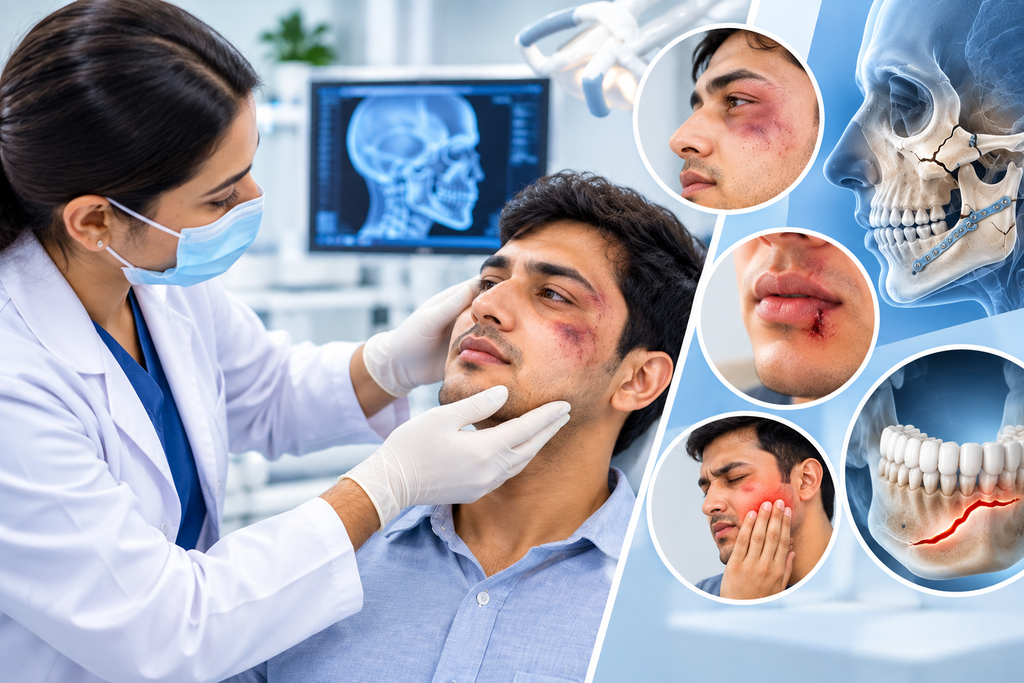
It is a rainy evening . A motorcyclist skids and falls. He is awake and talking, but his jaw aches, his lip is cut, and his face is beginning to swell. His family wonders: is this a dental problem, or something more serious?
Moments like this explain why maxillofacial trauma deserves attention. The term covers injuries to the face, jaw, mouth, teeth, facial bones, and surrounding soft tissues. Some are minor, while others need urgent care. After significant facial trauma, prompt assessment helps identify problems that are not always visible. This guide explains warning signs, diagnosis, and what to look for when seeking maxillofacial trauma treatment in Cuttack.
What Is Maxillofacial Trauma?
Maxillofacial trauma means injury to the face and jaw region. It can involve:
- Facial bones and the jaw
- Cheekbones and the nose
- The eye socket
- The mouth and oral structures
- Teeth
- Facial soft tissues such as skin, lips, and gums
What Causes Maxillofacial Trauma?
Common causes include:
- Road traffic accidents
- Bicycle or motorcycle accidents
- Falls, especially in children and older adults
- Sports injuries
- Workplace accidents
- Physical impact or other accidental injuries
What Types of Maxillofacial Injuries May Need Medical Treatment?
Injuries that may need professional evaluation include jaw fractures, cheekbone fractures, nasal fractures, orbital (eye socket) fractures, other facial bone fractures, dental and alveolar (tooth-supporting bone) injuries, soft-tissue injuries, jaw dislocation, and multiple facial injuries. Severity and treatment depend on the location and extent of the injury.
When Is Maxillofacial Trauma an Emergency?
Seek urgent medical evaluation for any of these signs:
- Difficulty breathing or swallowing
- Heavy or persistent bleeding
- Significant facial swelling
- Loss of consciousness, confusion, or other neurological symptoms
- Severe facial or jaw pain
- Inability to open or close the mouth normally
- A visibly displaced or deformed facial structure
- Double vision or significant vision changes
- Numbness of part of the face
- Severe dental or jaw displacement
- Suspected multiple facial fractures
These symptoms may need immediate emergency medical care rather than waiting for a routine dental appointment.
How Are Maxillofacial Injuries Diagnosed?
Doctors usually begin with a physical examination and a review of the injury and medical history. A dental examination may be added where appropriate. They also assess nerve function, vision, jaw movement, and bite. X-rays are often used, and CT scans may be advised when clinically indicated. Imaging matters because many facial fractures cannot be confirmed by looking or feeling alone.
What Does Maxillofacial Trauma Treatment Involve?
Treatment depends on the injury and may include:
- Observation and monitoring
- Medication for pain or infection when clinically indicated
- Wound management
- Dental stabilization
- Treatment of jaw injuries
- Fracture management
- Surgical repair when necessary
- Follow-up evaluation
Not every fracture needs surgery.
When Is Surgery Needed for Facial Fractures?
Surgery may be considered when there is significant displacement, functional problems, difficulty moving the jaw, bite misalignment, certain orbital or facial fractures, or multiple or complex fractures. The decision should be made only after clinical examination and appropriate imaging.
Why Early Evaluation Matters After Facial Trauma
Early evaluation helps doctors:
- Identify fractures
- Assess airway and neurological concerns
- Protect vision and facial function
- Evaluate dental and jaw alignment
- Reduce the risk of complications
- Plan appropriate treatment
Early assessment supports better decisions, though it cannot promise that complications will always be prevented.
What Should You Do Immediately After a Facial Injury?
- Seek medical evaluation for any significant trauma.
- Keep the person still if a serious injury is suspected.
- Apply gentle pressure to external bleeding when appropriate.
- Use a cold pack wrapped in cloth for swelling.
- Do not try to straighten a displaced jaw, nose, or facial bone.
- Avoid eating or drinking if surgery may be needed, unless medical professionals advise otherwise.
- Seek emergency care for breathing difficulty, uncontrolled bleeding, neurological symptoms, or serious eye symptoms.
First aid does not replace professional assessment.
Maxillofacial Trauma Treatment in Cuttack: What Should Patients Look For?
When choosing care, consider:
- Availability of an oral and maxillofacial surgeon
- Experience with facial and jaw trauma
- Access to appropriate diagnostic imaging
- Emergency assessment capability
- Multidisciplinary support when required
- Proper follow-up care
- Clear explanation of treatment options
When Should You Go to the Emergency Department After Facial Trauma?
Go without delay if there is:
- Breathing difficulty
- Severe bleeding
- Loss of consciousness
- Confusion
- Vision problems
- Severe facial swelling
- A suspected fracture
- Significant jaw displacement
- Severe uncontrolled pain
Frequently Asked Questions
1. What is Maxillofacial Trauma?
Ans :- It is an injury to the face, jaw, mouth, teeth, facial bones, or surrounding soft tissues.
2. When does facial trauma require emergency treatment?
Ans :- Emergency care is needed for breathing difficulty, heavy bleeding, loss of consciousness, confusion, vision changes, or major deformity.
3. What are the symptoms of a facial fracture?
Ans :- Possible signs include pain, swelling, bruising, bite changes, difficulty opening the mouth, numbness, or double vision. Only an examination can confirm a fracture.
4. Can a jaw fracture heal without surgery?
Ans :- Some may, depending on displacement and bite alignment. A specialist decides this after examination and imaging.
5. How are facial fractures diagnosed?
Ans :- Diagnosis involves clinical examination, X-rays, and often CT scans, along with checks of nerves, vision, and bite.
6. When should I see a maxillofacial surgeon after an accident?
Ans :- See one if you have jaw pain, bite changes, suspected fractures, dental displacement, or facial numbness, after emergency stabilization if needed.
7. Where can I get maxillofacial trauma treatment in Cuttack?
Ans :- Look for facilities with an oral and maxillofacial surgeon, emergency assessment, imaging access, and follow-up care.
8. Is every facial injury considered a medical emergency?
Ans :- No. Minor cuts or bruises may not be, but significant trauma or any warning sign needs prompt evaluation.
Conclusion
Urgent warning signs after facial trauma include breathing or swallowing difficulty, heavy bleeding, loss of consciousness, confusion, vision changes, facial numbness, severe swelling or pain, and visible deformity. Facial trauma should not be self-diagnosed, because serious injuries can be hidden beneath minor-looking swelling. If you or a family member has a significant facial, jaw, dental, or oral injury, seek medical evaluation promptly.
Facial Injury Looks Minor, But Is Something Hidden Beneath the Swelling?
After an accident, swelling and pain are easy to dismiss. But changes in your bite, trouble opening your mouth, or numbness may point to a fracture that cannot be seen from outside. Waiting can leave you unsure about what is actually happening. A timely assessment gives clear answers, whether reassurance or a treatment plan, so you can decide your next steps with confidence.
Need Expert Care for a Facial or Jaw Injury?
If you or a loved one in Cuttack has experienced significant facial or jaw trauma, please seek evaluation from a qualified oral and maxillofacial specialist. For emergency symptoms such as breathing difficulty, heavy bleeding, loss of consciousness, or vision problems, go to the nearest emergency medical service immediately. Consult a qualified professional for personalized assessment and advice.
Meet Your Dental Expert: Dr. Chinmayee Kar

Dr. Chinmayee Kar is a highly experienced dental surgeon with BDS and MDS qualifications and over 21 years of clinical experience. with expertise in dental care, Dr. Kar provides comprehensive evaluations and personalised treatment plans for patients dealing with tooth pain, infection, and complex dental conditions. Her patient-focused approach ensures that every treatment decision including whether to save or extract a tooth is based on a thorough clinical assessment and your individual needs.
Experiencing persistent tooth pain, swelling, infection, severe decay, or a damaged tooth? Do not ignore the signs. Schedule a dental evaluation today and take the first step toward protecting your smile and your overall health.
Visit Pearl Aesthetics | Dental Clinic | Implant
Address: C446, Eye Hospital Road, above Urban Cooperative Bank, CDA Sector VI, Kataka, Odisha 753014.
Visit Location :- https://maps.app.goo.gl/c7V6dMwHrBxicW938